Most of the books I read tend to relate to business, economics and finance, but the latest book I have is about a totally different topic — history. Indeed, history is a very special topic: while money and finances to me are about logics and numbers, history is a much more abstract subject – history is philosophical, history is not black and white, and history is an accumulation of time-tested wisdom that survive decades and centuries.
In the book “the Lessons of History” – written back in the 1960s by historians Will Durant and Ariel Durant – they explore what history can taught them about various subject including economics, religions, wars, rise and fall of nations, etc.
One of the ideas that stood out to me in the book is that states, nations, and empire dies, but civilization lives; and that’s a healthy thing to happen from the evolutionary perspective of human beings.
“The influence of geographic factors diminishes as technology grows. The character and contour of a terrain may offer opportunities for agriculture, mining, or trade, but only the imagination and initiative of leaders, and the hardy industry of followers, can transform the possibilities into fact…Man, not the earth, makes civilization.“
“Lessons in History”
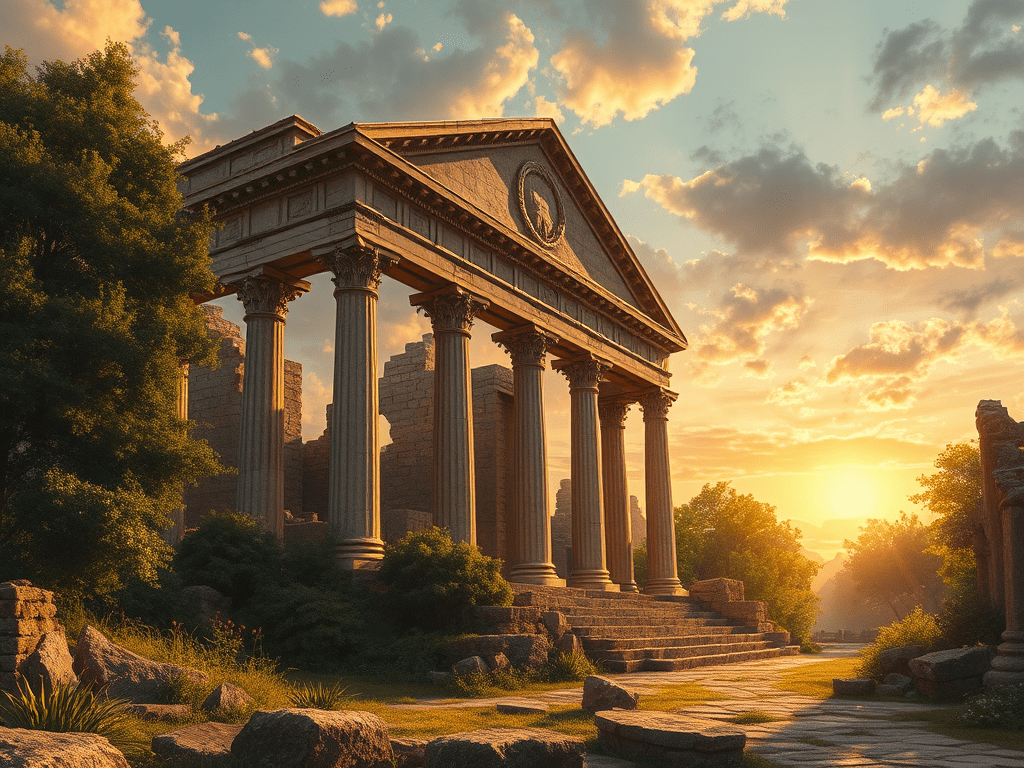
Indeed, states, nations, and even empires come and go. The Roman Empire is generally considered the longest lasting empire in history, lasting for over 1,000 years. Still, this empires experienced is own growth and decay. The Roman Empire was weakened when it was divided into Eastern and Western Roman Empire in around 400AD, and the Roman Empire eventually ended when Constantinople eventually fell to the Ottoman’s attach in 1453.
With the decline and the eventual death of the Roman Empire, does that mean everything – including the culture, the economics, the knowledges, the lessons – are gone? No, because while the empire comes and goes, civilization lives. The technologies that are invented, the knowledges that are accumulated, the communal culture that are developed, the collective memories that are built – they all passed on from one empire to the next and continues to be built.
This is why even the rise and fall of nations / empires is a very trivial thing when compared to the evolution of human history. in fact, such rise and fall, such cycle can be a healthy thing to happen for the evolution of human history. Nothing goes to waste, not even failures, because civilization lives.
“If a man is fortunate he will, before he dies, gather up as much as he can of his civilized heritage and transmit it to his children. And to his final breath he will be grateful for this inexhaustible legacy, knowing that it is our nourishing mother and our lasting life.”
“Lessons in History”
This makes me think of an interview of Elon Musk, where he talks about the probability of success for Tesla was just 10%. Then he was asked why would be still do it despite the low probability of success. That’s when he explained “when something is important enough (for mankind), you do it even if the odds are not in your favor.”
So empires dies, and civilizations live. Business empires can go into ruin, daunting projects could fail – any risk taking behavior in life may not pay off. Does that mean we don’t do it? No, because knowledge is passed on and civilization lives. We are not doing it for money or for ourselves, we are doing it for the evolution of the mankind.
 Books Bucks & Beyond
Leave a comment