“there really is no such thing as ‘the future’, singular. There are only multiple, unforeseeable futures, which will never lose their capacity to take us by surprise.”
Neil Ferguson
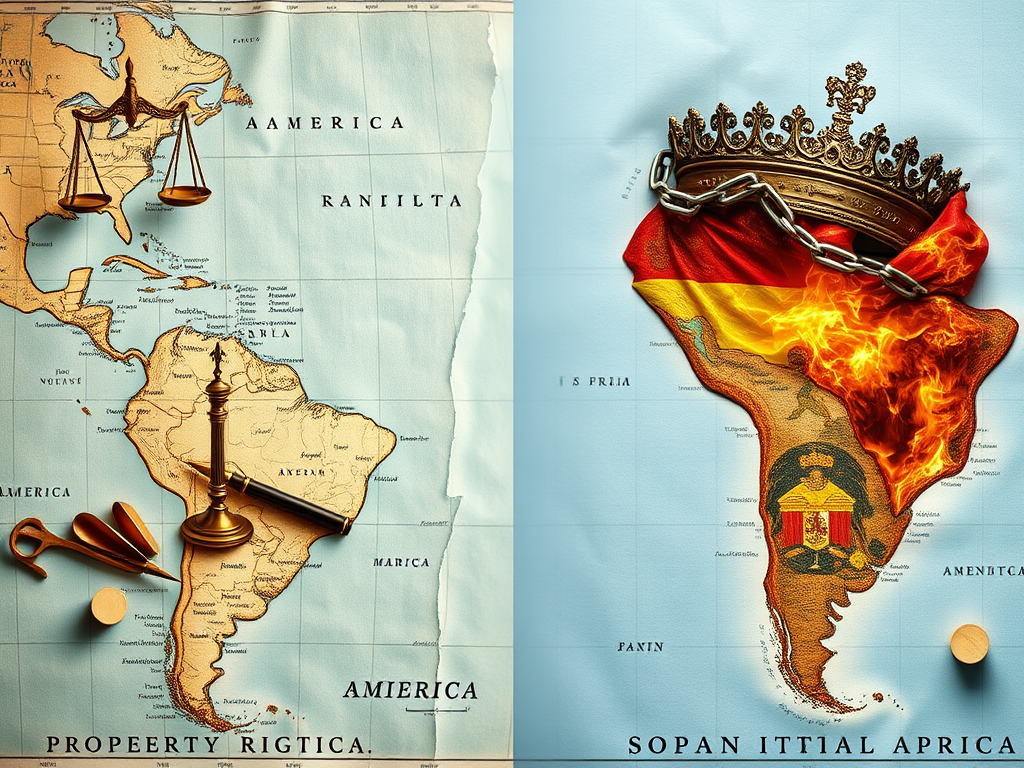
What causes the difference between the success of North America / British America vs the relatively more chaotic progress of South America / Spanish America? Some argue it is due to the difference in geography, some argue it is due to the difference natural resources – Neil Ferguson argued in his book “”Civilization: West and the Rest” that it is due to the value of rule of law / democracy in the founding of United States vs the rule of man, monarchy in the founding of Latin America.
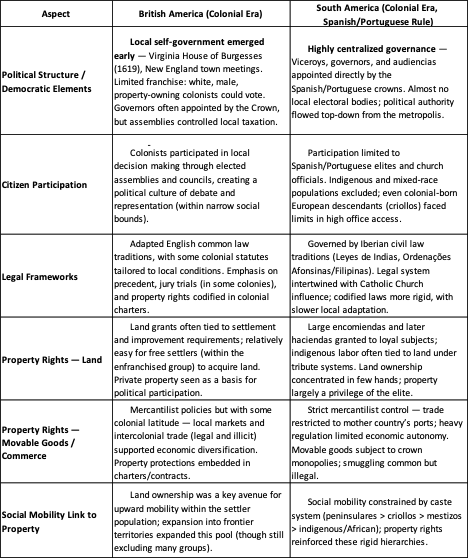
Indeed, Neil Ferguson’s argument made sense. The founding of North America has inherited from Britain the spirit of property right as well as the rule of law. The philosophical work of John Locke – British philosopher –has partially inspired the America Declaration of Independence, and one of the central aspects of John Locke’s philosophy is property rights. in terms of governance, Locke’s doctrine that governments need the consent of the governed is also central to the Declaration of Independence. Locke’s ideas about the separation of powers, where different branches of government have distinct functions, also contributed to the development of democratic systems. These ideas, particularly his emphasis on individual rights and limited government, have been highly influential in the development of democratic thought and continue to shape political discourse today, especially of that in the North America.
According to John Locke,
“though the earth, and all inferior creatures, be common to all men, yet every man has a property in his own person: this no body has any right to but himself. The labour of his body, and the work of his hands, we may say, are properly his. Whatsoever then he removes out of the state that nature hath provided, and left it in, he hath mixed his labour with, and joined to it something that is his own, and thereby makes it his property. It being by him removed from the common state nature hath placed it in, it hath by this labour something annexed to it, that excludes the common right of other men: for this labour being the unquestionable property of the labourer, no man but he can have a right to what that is once joined to, at least where there is enough, and as good, left in common for others”
Land ownership and property ownership were much more prevalent in North America compared to South America: for example, Neil Fugerson mentioned in his book that those who fought for the independence of America were awarded land, and those with a certain level of land ownership were allowed to vote or even become a government representative back in those day. Such ownership of land and properties provide an important incentive for those fighting for the independent as well as the ongoing development of North America. George Washington – founding father and the first President of the United States – was in fact a major landowner back then, and George Washington has gained his land through both inheritance as well as the his military services provided as the Commander in Chief of the Continental Army during the American Revolutionary War. Compared that to the initial founding South America / Spanish America, property ownership were much more limited to a small elite group of people, and a true democratic system failed to be established in South America back then. Simón Bolívar was widely regarded as the founding father to a number of South American countries : his vision of democracy was nuanced and differed from the modern understanding of representative democracy. Simón Bolívar believed that the newly liberated Spanish colonies weren’t immediately ready for a fully democratic system like the United States, and his proposed constitutions incorporated elements of republicanism and even authoritarianism to varying degrees.
It is up to debate whether the difference in property rights and democratic values is the most important contributor to the difference between North and South America, but what is undeniable is the importance of property right and ownership even in today’s society. Property rights and economics ownership provides the key incentives needed for the improvement of today’s society – ownership incentive people to make contribution to improve the overall system, thereby driving societal improvement. In a separate article I wrote previously, I have illustrated that one of the key underlying principle of the web 3 era is that of distributed, rather than centralized, ownership, which is supposed to position it much better for innovations and improvement vs the internet giants in the web 2.0 era (see link for the blog post I mention).
Source: my collaboration with Co-pilot
 Books Bucks & Beyond
Leave a comment