Japan’s northernmost island, Hokkaidō, feels like a country within a country. It’s vast, untamed, and full of contrasts: steaming volcanic lakes beside snow‑capped peaks, lavender fields stretching to the horizon, and seafood so fresh it tastes like the ocean itself. For travelers new to Japan, Hokkaidō offers a different rhythm — slower, wilder, and deeply tied to the land and sea.
🌸 Fields of Color, Peaks of Snow
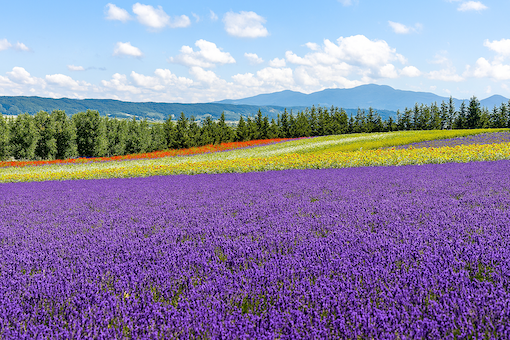
Step off the train in Furano in summer, and the air itself seems perfumed. Rolling hills are blanketed in lavender, sunflowers, and poppies, creating a patchwork of color that feels almost surreal. In winter, the same region transforms into a skier’s paradise, with powder snow so light it’s earned the nickname Japow among international snowboarders.
Further east, Shiretoko Peninsula juts into the Sea of Okhotsk, a UNESCO World Heritage site where brown bears roam and drift ice floats ashore in winter. It’s one of the last truly wild frontiers of Japan — a place where nature still feels raw and untamed.
And then there’s the volcanic heart of the island: Lake Shikotsu and Lake Tōya, caldera lakes formed by ancient eruptions. Their waters are impossibly clear, reflecting mountains that seem to rise straight from the depths.
🦀 The Ocean on Your Plate
If Hokkaidō’s landscapes are dramatic, its food is equally unforgettable. The island is Japan’s pantry, producing some of the country’s most beloved ingredients.
- Seafood Royalty: Crab is king here — snow crab, hairy crab, and king crab, each with its own season. Visit a morning market in Hakodate or Sapporo, and you’ll see tanks brimming with live crabs, ready to be steamed or grilled on the spot.
- Sapporo Ramen: While Tokyo and Fukuoka have their own ramen traditions, Sapporo’s miso ramen is comfort in a bowl. Rich, slightly sweet broth, topped with butter and corn — a nod to Hokkaidō’s dairy farms.
- Dairy Delights: Speaking of dairy, Hokkaidō produces Japan’s best milk, cheese, and ice cream. A soft‑serve cone from a roadside farm stand is practically a rite of passage.
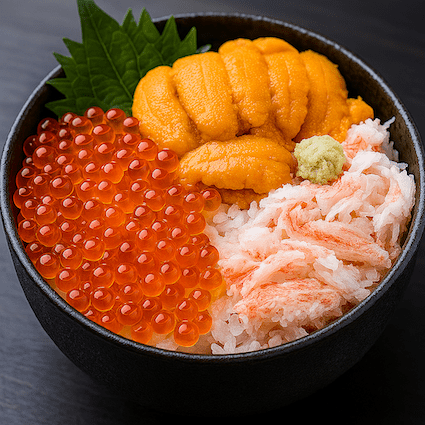
- Uni and Ikura: Sea urchin and salmon roe are local delicacies, often served over rice in a simple donburi that lets the freshness speak for itself.
🚂 Journeys Through the Seasons
Part of Hokkaidō’s magic is how different it feels depending on when you visit.
- Winter: The Sapporo Snow Festival transforms the city into a wonderland of ice sculptures, while Niseko draws skiers from around the world.
- Spring: Cherry blossoms arrive later here than in Tokyo, often in early May, making it a perfect escape if you missed the sakura further south.
- Summer: Lavender fields in Furano and the cool climate make it a refreshing retreat from Japan’s humid mainland.
- Autumn: Daisetsuzan National Park bursts into fiery reds and golds, offering some of the earliest and most spectacular fall foliage in the country.
🍶 Eating Like a Local
To really taste Hokkaidō, you need to eat like the locals do. That means:
- Izakaya hopping in Sapporo, where you can sample everything from grilled scallops to jingisukan (barbecued lamb, named after Genghis Khan).
- Visiting a morning market in Hakodate or Kushiro, where fishermen sell their catch straight from the docks.
- Pairing seafood with sake — Hokkaidō’s crisp, clean water makes for excellent sake brewing.
For more on seasonal food festivals and local specialties, the Hokkaidō Tourism Organization is a great resource.
✨ Why Hokkaidō Belongs on Your Itinerary
For first‑time visitors to Japan, Hokkaidō offers something different from the neon buzz of Tokyo or the temples of Kyoto. It’s a place where you can hike through untouched forests in the morning, soak in a hot spring by afternoon, and feast on world‑class seafood by night.
It’s also a reminder that Japan is not just one story, but many. Hokkaidō’s story is written in snow and sea, in lavender fields and steaming bowls of ramen, in the quiet resilience of a land shaped by volcanoes and ice.
If you’re looking for a Japan that feels both familiar and entirely new, Hokkaidō is waiting — wild, delicious, and unforgettable
 Books Bucks & Beyond
Leave a comment