
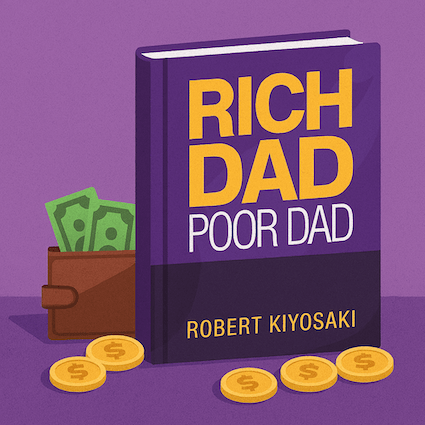
🌧 From Rainy Afternoon to Financial Awakening
I still remember the first time I picked up Rich Dad Poor Dad. It wasn’t in a finance class or during some grand career planning session — it was on a rainy Sunday afternoon, tucked away in a second‑hand bookstore. I wasn’t looking for a “money book.” In fact, I thought personal finance was all about spreadsheets, bank statements, and cutting back on coffee.
But Robert Kiyosaki’s slim paperback didn’t feel like a textbook. It felt like a conversation — one that would quietly, but permanently, change the way I thought about work, wealth, and the choices we make every day.
📚 A Book That Sparked a Global Conversation
Published in 1997, Rich Dad Poor Dad became one of the best‑selling personal finance books of all time, with over 32 million copies sold in dozens of languages. It didn’t just sell well — it sparked debates. Some praised it for making financial literacy accessible; others criticized it for being light on specifics.
Regardless of where you stand, it’s hard to deny its cultural impact. For many, it was the first time they’d heard terms like “assets” and “liabilities” explained in plain language. For others, it was the first book that made them believe wealth wasn’t reserved for the already‑rich.
👨👨👦 Two Fathers, Two Financial Worlds
Kiyosaki’s narrative is deceptively simple: he grew up with two father figures.
- Poor Dad — his biological father, well‑educated, hardworking, and firmly rooted in the belief that academic achievement and a stable job were the keys to success.
- Rich Dad — his best friend’s father, a businessman who believed in financial literacy, investing, and making money work for you rather than trading time for it.
Through their contrasting philosophies, Kiyosaki invites us to see how mindset shapes financial destiny. Poor Dad valued security; Rich Dad valued opportunity. Poor Dad saw money as something to be earned and spent; Rich Dad saw it as a tool to create more money.
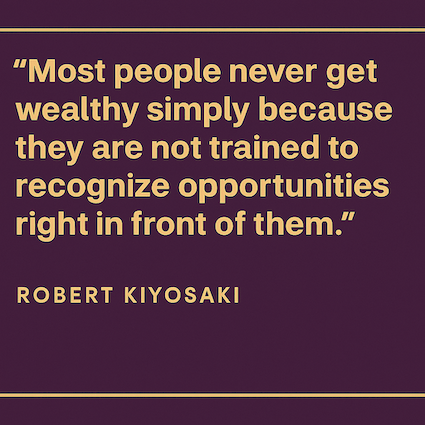
💡 Lessons That Shift How You See Money
1. Assets vs. Liabilities — The Simplest, Most Misunderstood Rule
Kiyosaki’s definition is refreshingly straightforward:
- Assets put money in your pocket.
- Liabilities take money out.
For beginners, this flips conventional wisdom. Many people think their home is their biggest asset, but if it costs more in mortgage payments, maintenance, and taxes than it generates in income, it’s a liability.
When I first read this, I realized my own “asset list” was mostly liabilities in disguise — a car that depreciated, gadgets that lost value, and a wardrobe that drained my bank account. The shift was subtle but powerful: I began asking, Will this purchase feed me or drain me?
2. Financial Literacy Over Formal Education
Kiyosaki argues that schools rarely teach how money works — how to read a balance sheet, understand taxes, or evaluate investments.
For beginners, this is liberating. You don’t need an MBA to learn the basics of wealth building. You can start with free resources:
- Podcasts like ChooseFI or BiggerPockets Money.
- Beginner books like The Simple Path to Wealth.
- Free online courses on platforms like Coursera or Khan Academy.
When I started reading beyond Rich Dad Poor Dad, I realized financial literacy is a lifelong skill — and the earlier you start, the more options you have.
3. Work to Learn, Not Just to Earn
This lesson hit me hardest. Poor Dad saw jobs as a way to earn a living; Rich Dad saw them as a way to acquire skills.
For example, taking a role in sales might not be your dream job, but it teaches persuasion, negotiation, and resilience — skills that can be monetized in countless ways later.
Early in my career, I turned down a lower‑paying role that would have taught me marketing because I was focused on salary. In hindsight, that decision delayed my ability to launch my own projects. Kiyosaki’s point is clear: sometimes the best “pay” is the skill set you walk away with.
4. Mindset Shapes Outcomes
Fear of risk keeps many people stuck in the “rat race.” Rich Dad didn’t avoid risk — he learned to manage it.
For beginners, this doesn’t mean gambling your savings. It means starting small:
- Invest a modest amount in an index fund.
- Test a side hustle with minimal upfront cost.
- Learn how to evaluate opportunities instead of dismissing them outright.
The first time I invested in something outside my comfort zone — a small stake in a friend’s startup — I was terrified. It didn’t make me rich, but it taught me how to assess business models and spot warning signs. That knowledge was worth far more than the money I put in.
🪞 Breaking My Own “Poor Dad” Script
Reading this book made me realize that my own “Poor Dad” mindset wasn’t about my actual father — it was about the cultural script I’d absorbed: Study hard → Get a good job → Save a little → Retire at 65.
It’s a safe path, but it’s also narrow. Kiyosaki’s Rich Dad opened a window to a wider landscape — one where money isn’t just earned, it’s leveraged. I began to see opportunities in everyday life: a skill I could monetize, a side project that could become a business, even the idea that investments weren’t just for “other people.”
⚖️ Inspiring, But Not Without Gaps
What Works:
- Accessible storytelling — no jargon, no intimidating charts.
- Mindset shift — it makes you question long‑held beliefs about money.
- Sparks curiosity — even if you don’t follow every idea, it gets you thinking.
Where It Falls Short:
- Light on specifics — beginners may need follow‑up books for practical steps.
- Context‑dependent — some strategies (like real estate) vary widely by market.
🛠 Five Actions You Can Take Right Now
- List Your Assets and Liabilities — Be brutally honest. Write them down and review monthly.
- Invest in Learning — Commit to one finance book or course every month.
- Start Small — Buy a single share or launch a tiny side project to learn by doing.
- Question the Script — Ask if your career path is building assets or just paying bills.
- Talk About Money — Break the taboo. Share ideas, ask questions, and learn from others.
🎯 The Real Gift of This Book
Rich Dad Poor Dad isn’t the only book you’ll need to master personal finance — but it might be the one that makes you care enough to start. For me, it was the spark. It didn’t hand me a blueprint, but it gave me the courage to draw my own.
And maybe that’s the real lesson: wealth isn’t just about numbers in a bank account. It’s about the freedom to choose your path — and the mindset to believe you can.


Leave a Reply